
Hardware integration / Mälardalen University
Intent-driven multimodal robotic rehabilitation arm
Building the electrical backbone that connects intent detection, computer vision and adaptive grasping.
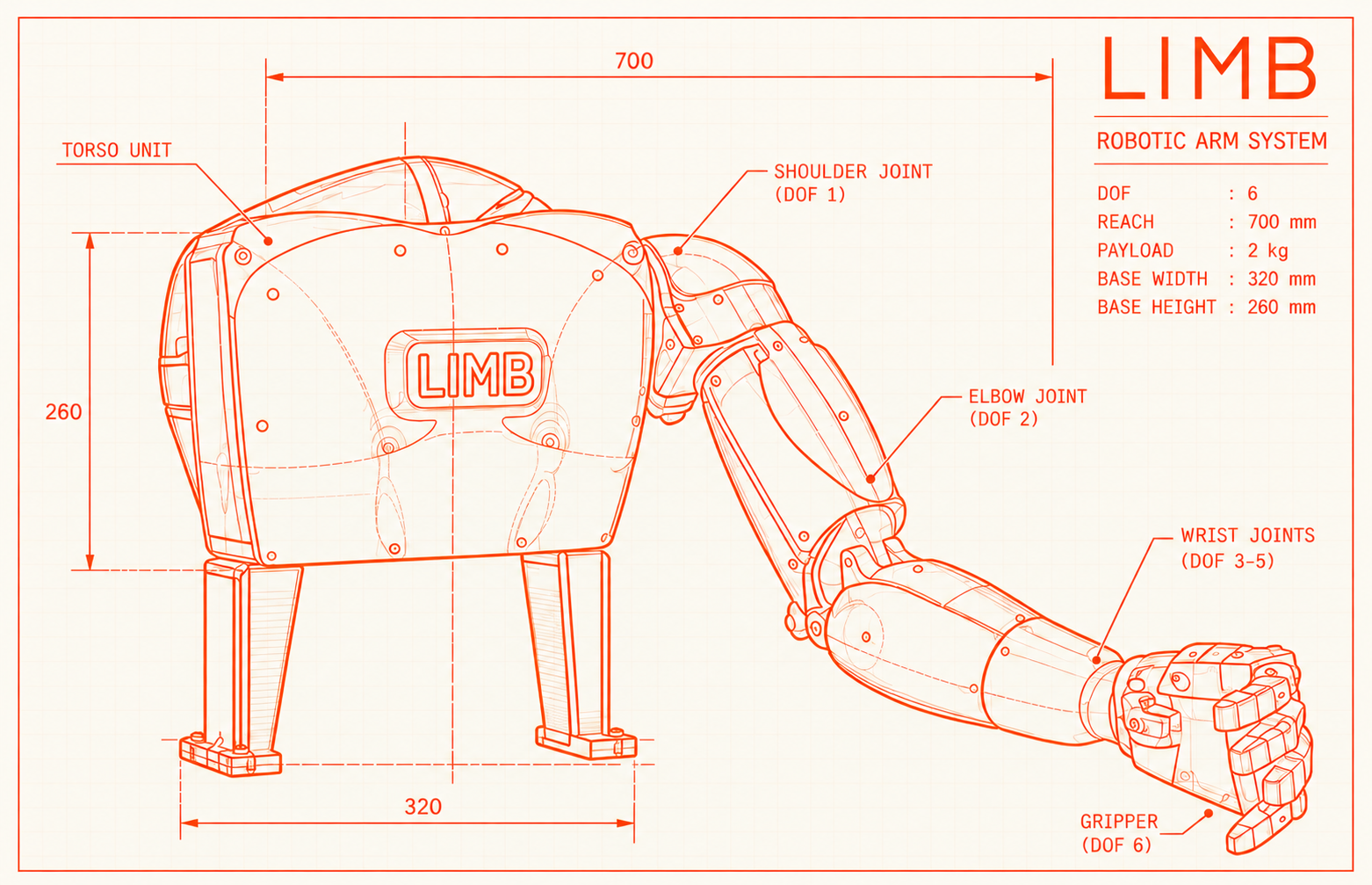
The engineering challenge
A multimodal robotic arm brings together different kinds of hardware: sensors that detect user intent, a computing platform for vision and decision-making, and actuators that execute motion. The project combined EMG-based intent detection, computer vision and adaptive grasping.
My work focused on the infrastructure connecting those parts. The arm needed power across several voltage domains and a distributed communication network between ESP32-C3 nodes and a Jetson AGX Orin computing platform.
My contribution
- Power distribution: designed and implemented four power rails providing 12 V, 7.4 V, 6 V and 5 V for 10 actuators and five distributed nodes.
- Distributed communication: helped design the CAN architecture connecting the ESP32-C3 nodes with the Jetson AGX Orin platform.
- System integration: led hardware integration and communication reliability work.
- Fault diagnosis: traced communication failures to power-domain interactions and reverse current propagation.
Looking beyond an isolated subsystem
The communication failures made power-domain behaviour central to the debugging work. The tracing work connected the failures to power-domain interactions and reverse current propagation.
This is the part of engineering I’m drawn to: tracing a visible symptom through the physical connections until the underlying interaction becomes clear.
What the work delivered
I built the arm’s electrical backbone, implemented its four power rails and contributed to its distributed communication architecture. The work also identified causes of hardware-level communication failure during system integration.