
Wearable sensing / Mälardalen University
Low-cost sign language interpretation glove
A wearable prototype exploring low-cost sensing alternatives for American Sign Language alphabet recognition.
The engineering challenge
The project aimed to build a sensor-based glove for American Sign Language alphabet recognition using low-cost components as alternatives to expensive flex sensors.
The challenge was practical as well as electronic: low-cost sensing components needed to be assembled and soldered into a physical wearable prototype.
My contribution
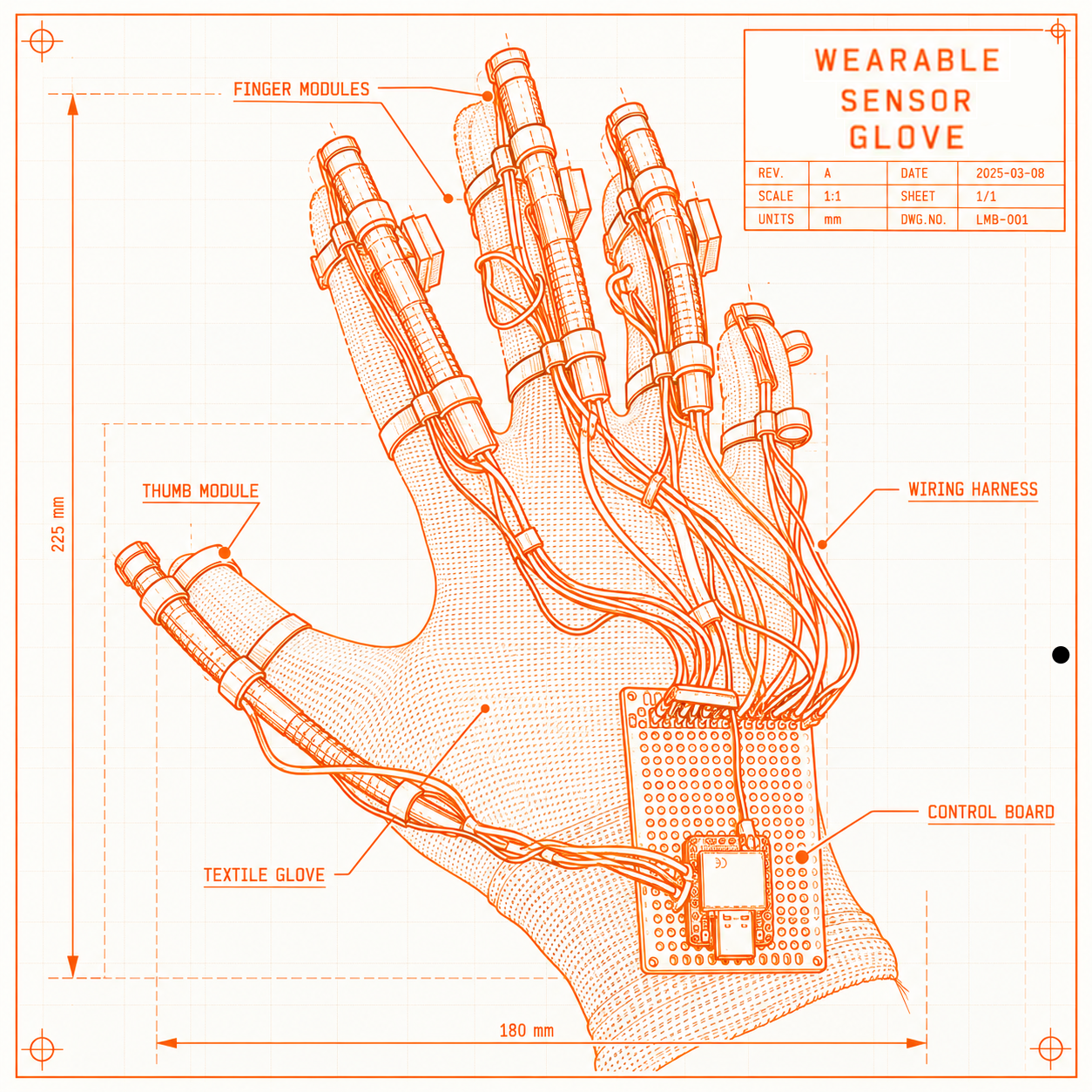
I assembled and soldered the glove’s sensing hardware. I integrated three types of sensors onto the wearable form factor:
- LED–photodiode bend sensors as part of the low-cost alternative to conventional flex sensors.
- Hall effect sensors as an additional sensing element in the glove.
- An accelerometer integrated alongside the finger sensing hardware.
I also supported hardware debugging and iterative design throughout the project.
From components to a wearable
My role centred on making the sensing concept tangible: assembling the physical glove, connecting its components and supporting the hardware iterations. This brought soldering, sensor assembly and debugging into the same prototype cycle.
What the work delivered
The project produced a physical sensor glove prototype with optical, magnetic and acceleration sensing integrated into a wearable form factor.